Understanding Dental Fillings: From GIC to Temporary Solutions
Toothique Jaipur provides natural, long-lasting dental fillings tailored to stop decay and restore your tooth’s strength.
Mar 13, 2025
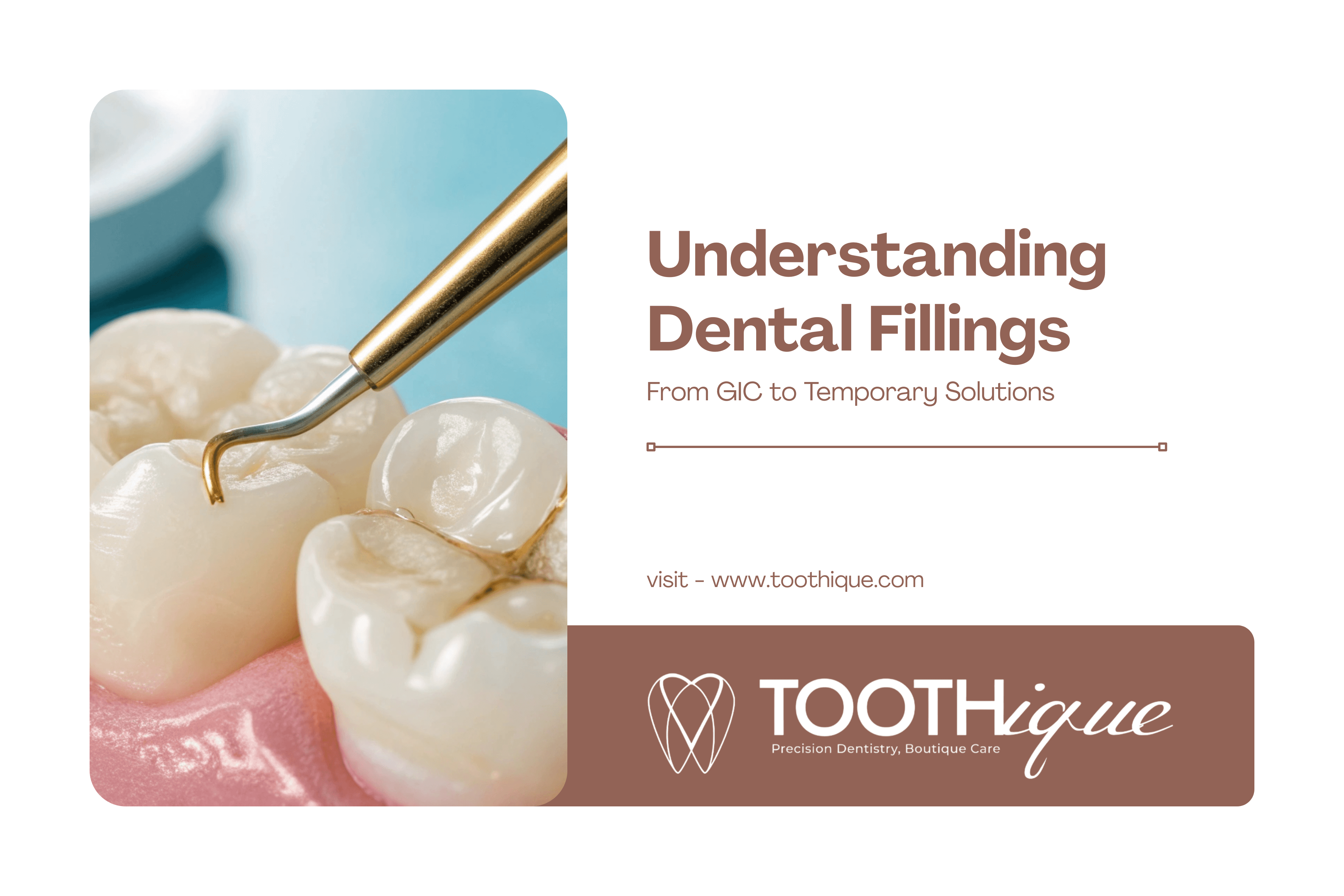
A lot of people hear the term “dental filling” and think it’s a small, quick fix. And it is — but it’s also one of the most important things we do in general dentistry because it stops small problems from becoming big ones. Cavities, minor chips, little worn-out spots… fillings help restore strength so your tooth works like it should. At Toothique, we like keeping things clear and simple, so here’s an easy breakdown of what different fillings actually mean.
Whenever you visit Toothique in Jaipur and we find a cavity during your check-up, Dr. Deepa Sadhnani talks through the options that match your tooth, the size of the decay, and how much pressure that tooth handles. The aim is always the same: remove the decay and replace it with something that protects the tooth and feels natural when you chew.
Different Types of Fillings
Composite (Tooth-Colored)
These fillings blend right into your natural tooth shade. They’re strong, bond directly to the tooth, and work well on both front and back teeth. Most people choose them simply because they look clean and invisible.
GIC Dental Filling
A gic dental filling works a bit differently — it releases fluoride, which helps protect the tooth and keeps future decay away. They’re often used on areas that don’t take much bite pressure, on baby teeth, or for people with higher cavity risk. A gic dental filling is also helpful for sensitive teeth.
Temporary Dental Filling
A temporary dental filling is the short-term option we use when the tooth needs time before the final restoration. This happens when:
you’re in between steps of a root canal,
you need relief from pain quickly,
or the tooth needs to settle after deep cleaning.
It’s basically a protective cover until the permanent filling goes in.
Dental Cement Filling
A dental cement filling can be used beneath other fillings, as a base, or for certain temporary fixes. There are different types depending on the situation — it’s chosen based on what the tooth structurally needs.
Precautions After Dental Filling
Taking care of the filling in the first few days helps it last longer. A few important precautions after dental filling include:
Don’t chew on the numb side until sensation returns.
Sensitivity to cold, heat, or pressure is normal for a little while if the cavity was deep.
Brush and floss like usual — just stay gentle around the new filling on day one.
If biting feels uneven or something hurts more than expected, reach out so it can be checked.
At Toothique, we take time with every filling — choosing the right material, shaping it properly, and making sure it feels natural in your bite. Our focus in general dentistry is always long-lasting, comfortable results.
Whenever you feel something is off with a tooth or you’re due for a check-up, you can always schedule a visit at Toothique. We’ll guide you through what your tooth really needs.
Blog